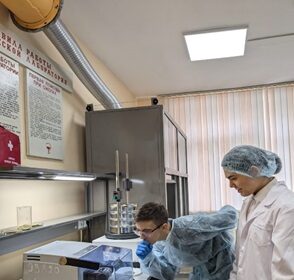
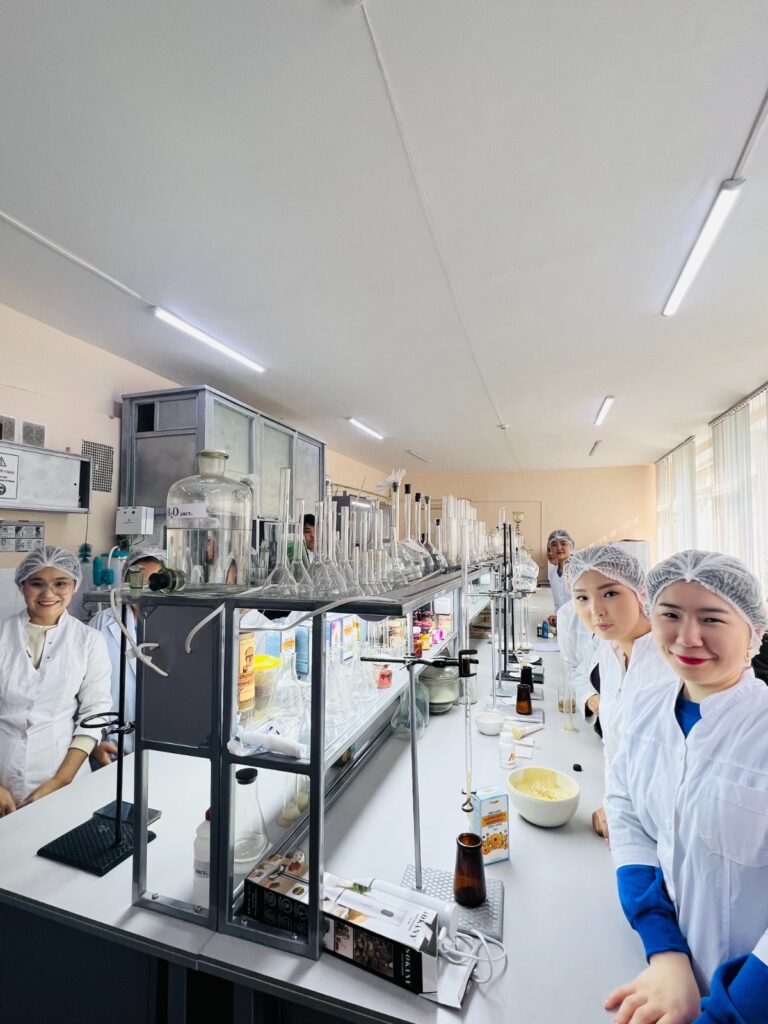
The Department of Chemical Technology and Ecology of the non-profit joint stock company "Karaganda Industrial University" acted as a platform for research, innovation and experiments in real time. Today, unique products based on natural herbs and berries are created here. Both students and high school students are involved in the development.
One of the successful projects of the "Living Laboratory" was a cough syrup based on a phytocomposition. Under the guidance of scientists, high school students of Temirtau secondary school No. 19 collected and analyzed the necessary information, selected the components of the phytocomposition and disassembled the technology of syrup preparation.
"Such projects allow students to immerse themselves in science, as well as provide access to the research base of our university. The research component, teamwork and obtaining a highly specialized educational base will help students decide on their future profession," said the rector of КarIU, Doctor of Technical Sciences, Professor Bakhyt Zhautikov.
According to statistics, today diseases of the respiratory system accompanied by cough are one of the most common reasons for contacting a doctor. At the same time, modern patients increasingly prefer natural medicines, as they are associated with greater safety and environmental friendliness.
"Some synthetic drugs are addictive or become less effective with prolonged use. Natural herbal remedies are less susceptible to this phenomenon. Unlike some synthetic drugs, herbal remedies are less likely to cause allergic reactions, stomach irritation, and other undesirable effects. In addition, preparations based on local medicinal plants may be more affordable than imported synthetic analogues. Thus, the development of a syrup based on a phytocomposition is an urgent area that combines a scientific approach with the use of natural resources to improve public health," explains Professor Saule Kabieva, Head of the Department of Chemical Technology and Ecology.
The composition of the phytocoposition, developed by schoolchildren, includes marshmallow root, licorice root and eucalyptus. As a result of the experiment, the participants received an effective medicine that provides a comprehensive therapeutic effect for respiratory tract diseases.
In addition, as part of the learning process, students also learned how to make ointments and potions, sweets and drinks, antibacterial film and healing patches. So far, all products are produced in small quantities, but the university plans to mass-produce them.