
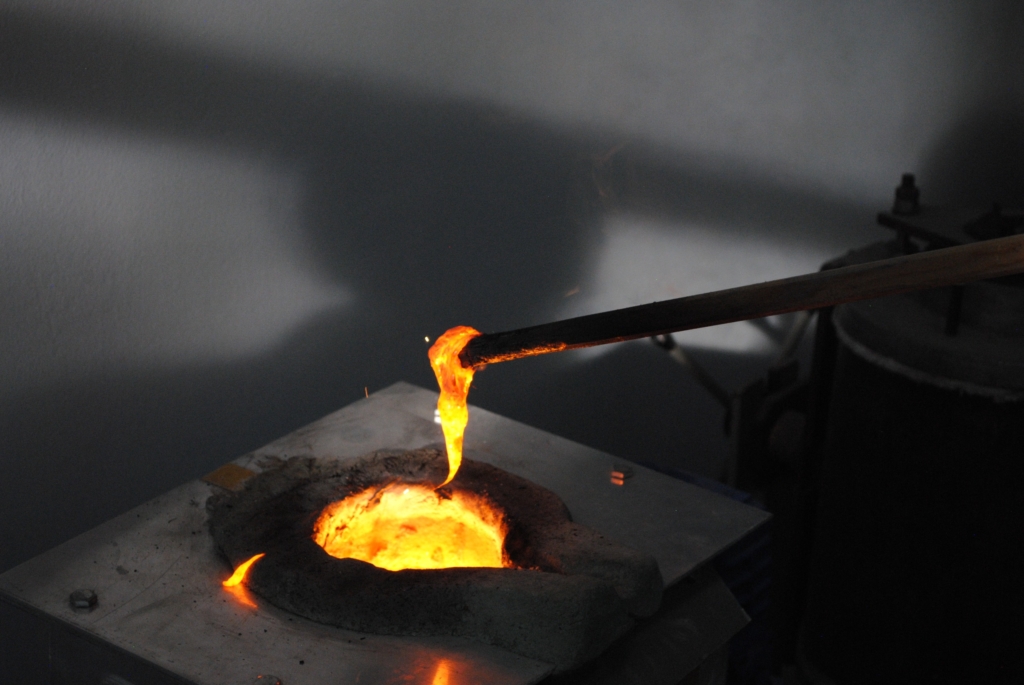
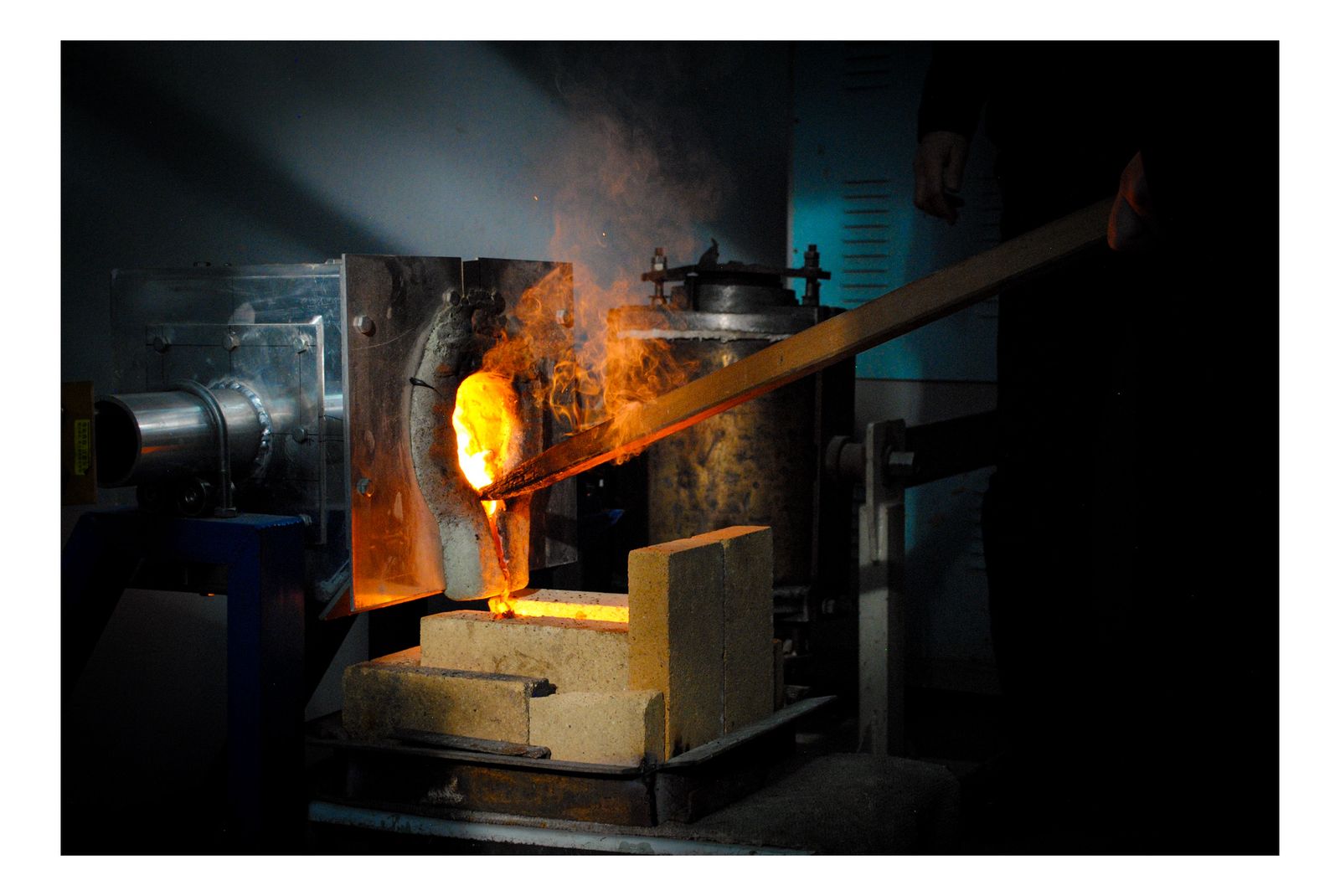
At Karaganda Industrial University, tests were conducted on a new smelting furnace that has already become an important part of the educational process. Three trial smelts demonstrated how the equipment “learns” to operate, reaches a stable mode, and where its real performance limits lie.
The first smelt was more introductory in nature. The furnace was started from a cold state; heating took a long time, and the smelting process itself proved to be uneven. As a result, the metal solidified imperfectly: the ingot was produced with defects. This experience clearly showed that without precise adjustment and control, rushing is not an option — the equipment requires a careful approach and time to “warm up.”
The second run was noticeably more confident. Although the start was again from a cold furnace, heating and smelting proceeded faster, and additional holding at high temperature allowed the metal to level out properly. The result pleased the specialists: the ingot turned out smooth and of high quality. This confirmed that the furnace is capable of operating stably and delivering predictable results.
The third smelt was the most impressive. The furnace was already preheated, the process proceeded at maximum speed, and it took a record-short amount of time. The quality of the metal was once again excellent, but the protection system was triggered due to overload. This moment became an important lesson: the pursuit of speed has its limits, and these must be taken into account to avoid accidents.
“Overall, the tests showed a clear evolution: from initial trials and errors to confident, stable operation, and then to an attempt to reach the maximum capabilities,” explained Nikolai Zobnin, Head of the Department of Science and Technology Commercialization. “As instructors explain to students, it is like climbing a mountain: move too slowly — you lose time; move too abruptly — you risk a breakdown. The key is to find the optimal pace.”
Today, the university is focusing on intelligent process control so that the furnace itself can maintain a balance between speed, quality, and safety. For students, these tests became a vivid example of how theory is transformed into practice, and how every mistake turns into valuable experience.
 Просмотров: 0